
Eagle County Released Mugshots Records
A booking photo is tied to a custody event, not to the final court result. In Eagle County, the Web Jail Viewer landing page says public information configured by the jail may include descriptive information, mugshot images, and offenses charged by the arresting agency. It also warns that people listed have been arrested but not necessarily found guilty, and it directs users to Eagle County Combined Court for final dispositions.
That distinction is the key to released mugshots. A person can be out of custody and still have a booking photo in the jail record, but the photo may not be publicly displayed. The record may be limited by sealing, juvenile rules, redaction, system retention, or records-custodian discretion. Colorado treats booking photos as criminal justice records controlled by the agency that created or maintains them, subject to the Colorado Criminal Justice Records Act and related limits.
Eagle County Mugshot Source Channels
The official path depends on which agency created the photo. A county jail booking photo belongs first to the Eagle County Sheriff's Office record. A state prison image belongs to the Colorado Department of Corrections profile. A registry photo, when public, belongs to the registry record. Local news or sheriff media can also show an image in a dated public-safety release, but it is not a complete archive of jail releases.
| Channel | Photo access | How to use it |
|---|---|---|
| Eagle County Web Jail Viewer | May show mugshot images if configured | Search by name or release-date range with OUT OF CUSTODY. |
| Sheriff records request | Possible booking-photo copy, subject to law and redaction | Ask for the photo tied to a specific booking with exact name and date of birth. |
| CDOC offender search | May show a state corrections image | Use for people transferred to or discharged from Colorado state prison. |
| SOTAR or CBI registry | Only for registry-qualified public records | Use only when the person is subject to public registry display rules. |
| Official news or sheriff media | Sometimes includes images | Read source dates and verify status with sheriff, court, or CDOC records. |
The Eagle County Web Jail Viewer screenshot is from the official viewer landing page, where the sheriff describes possible public booking-image display.
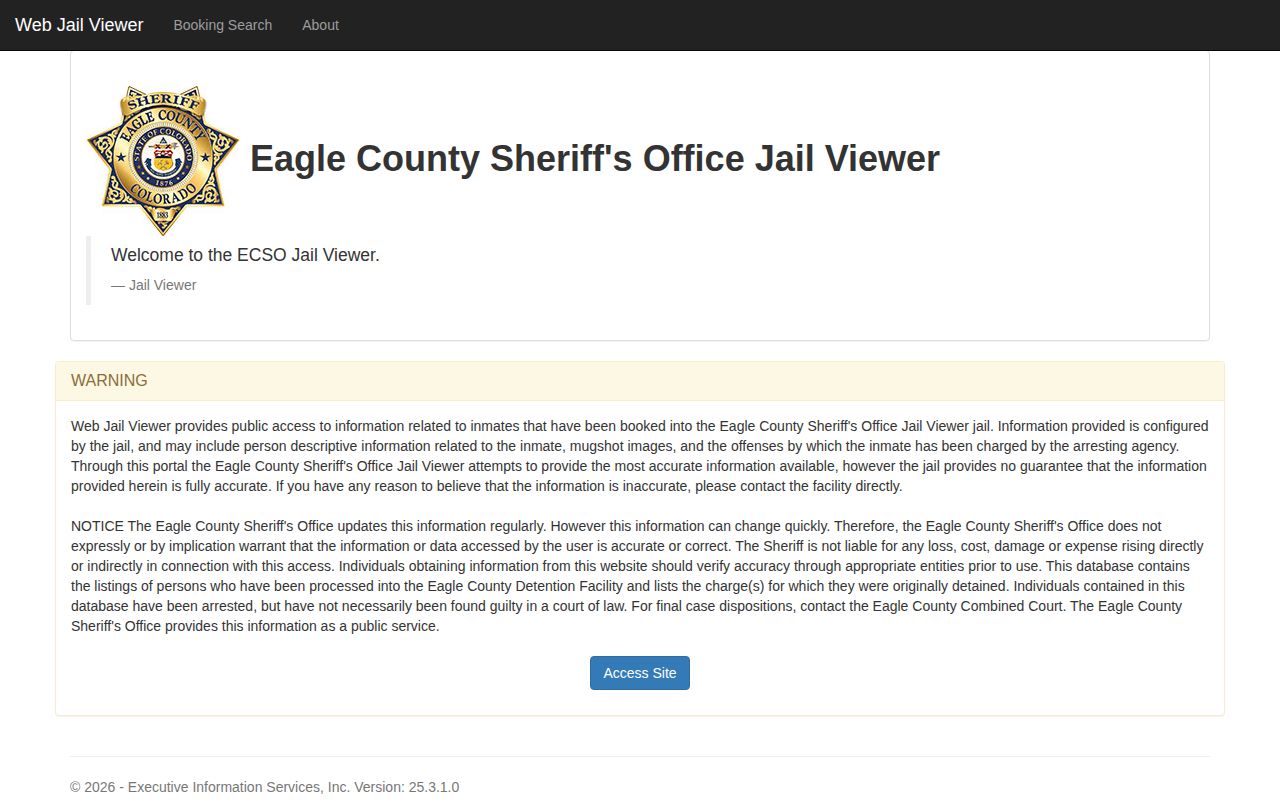
The viewer is the first official place to check for a county jail booking photo, but the wording is conditional.
Search Eagle County Booking Photos
The closest official source for a released Eagle County jail booking photo is the sheriff's Web Jail Viewer. Use the Booking Search Query, search by Last Name and First Name when known, and add a release-date window with Status set to OUT OF CUSTODY if the person has already left the jail. The same search form supports the recent-release workflow used for the released last 24 hours page.
- Open the booking search form.
- Enter the name if the person is known, or use release dates for a recent out-of-custody search.
- Set Status to
OUT OF CUSTODYfor a released person. - Open the matching result and check whether a photo field appears.
- Use the court record or records unit if the booking details need formal confirmation.
No Eagle County sheriff mobile app showing jail mugshots was confirmed in the research. VINELink can help with custody notifications, but it is not the county's mugshot gallery or a complete photo source.
Request Eagle County Booking Photo
If the viewer does not show a photo, the next source is the Eagle County Sheriff's Office records page. The research found that the requester must provide the exact spelling of the person's name and date of birth to inquire about a person or obtain a record. The records page also says sealed records are not releasable and juvenile records generally are not public.
- Identify the person with exact name and date of birth.
- Add the approximate booking date, release date, and case or report number if known.
- Ask for the booking photograph tied to that specific booking, not a broad photo search.
- Use the sheriff records form process and include required identity or notarization materials where the form requires them.
- Expect fees, redaction, or denial when Colorado law, sealing, juvenile limits, or case-specific concerns apply.
The sheriff records screenshot below is from the official records page, the fallback when the viewer does not display a released person's booking image.
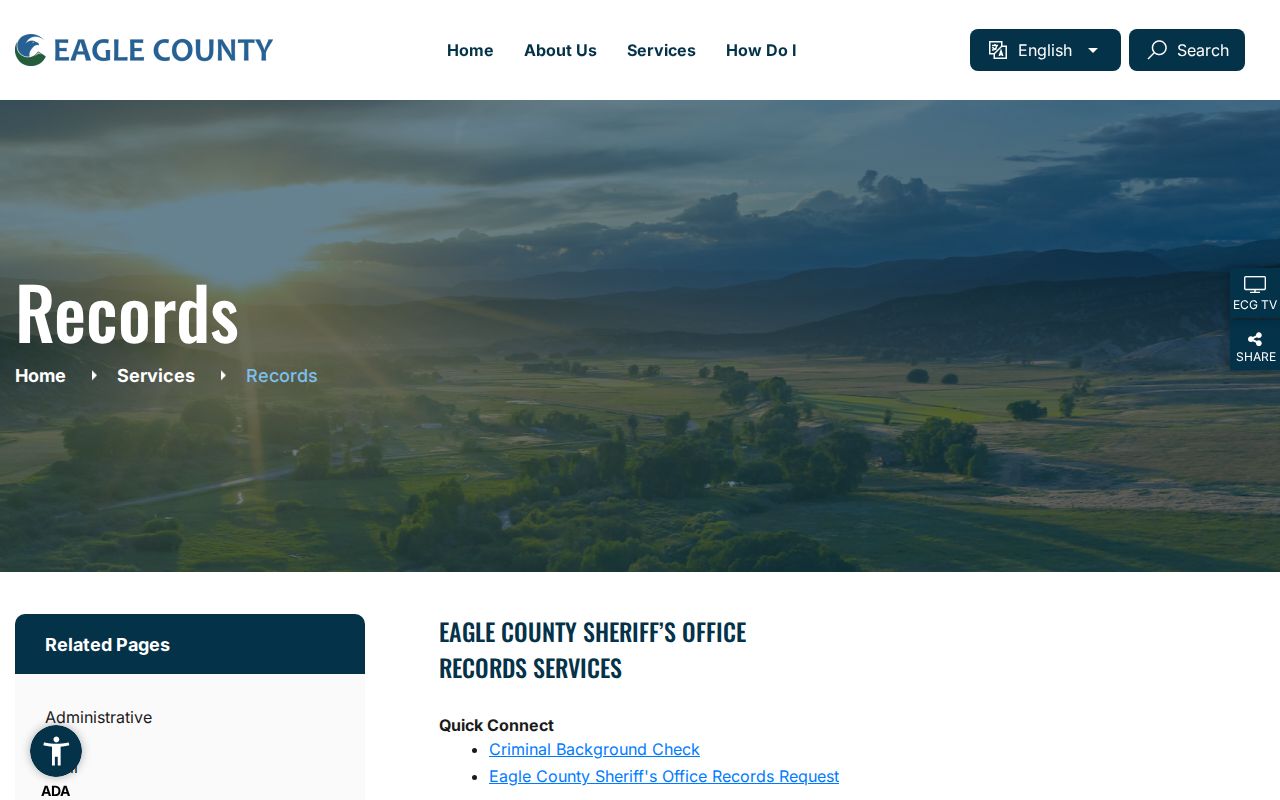
A records request is also the right route when the public viewer no longer shows the old out-of-custody record.
Eagle County CDOC Registry Photos
A CDOC image is not the same as an Eagle County booking photo. If a person left Eagle County jail for a state prison sentence, the public state profile may become the better source for a current corrections image and release or discharge date. The Colorado Department of Corrections offender search can show DOC number, name, age, photo, physical descriptors, convictions, and parole or release dates when those fields apply.
A registry source is even narrower. The SOTAR public registry or CBI-related registry path may display information and sometimes images for people who meet public registry display criteria. That does not make it a general mugshot source. It should only be used for registry-qualified records and should be read with the limits stated by the registry itself.
The CDOC image path is shown on the state offender search screenshot below.
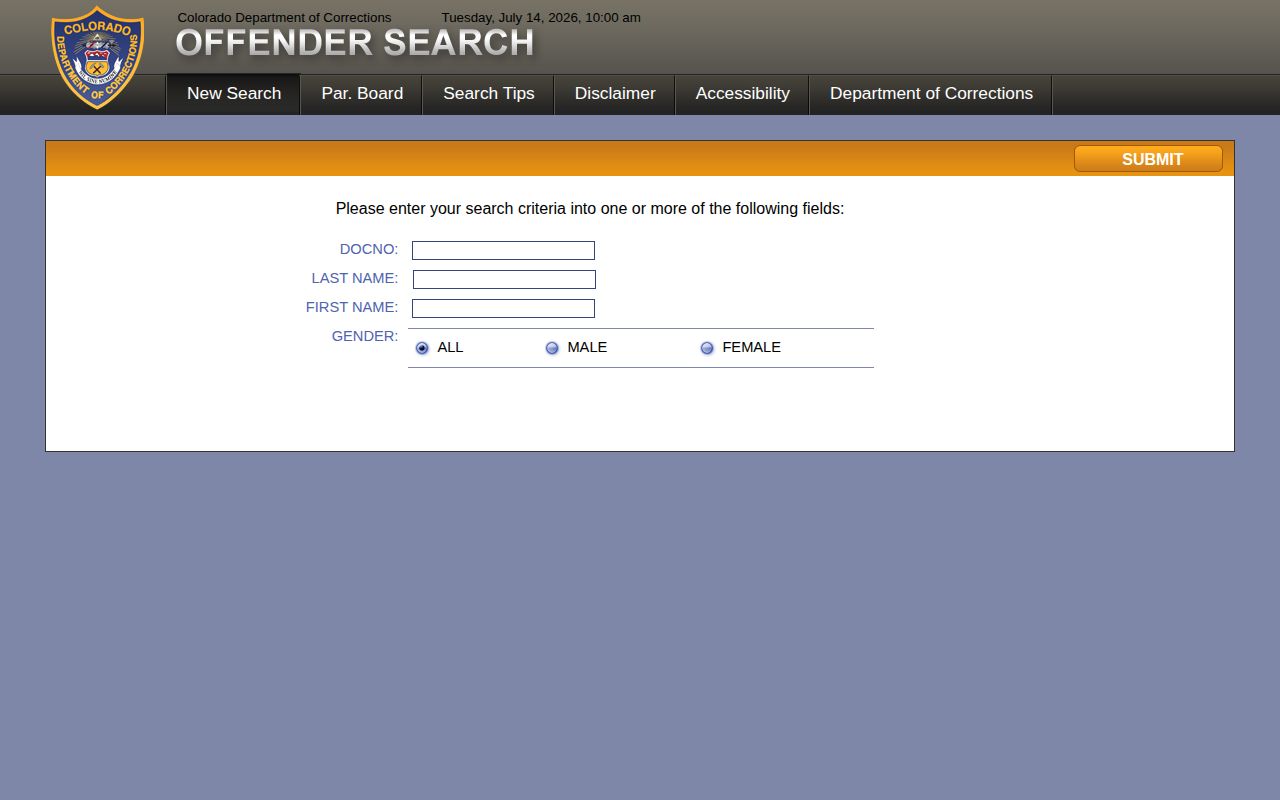
Use CDOC only when the person is in the state corrections system, not for every county jail release.
Eagle County Mugshot Sealing Limits
Colorado sealing is a real public-access boundary. The Colorado Judicial Branch says sealing hides criminal records from public view, though the records still exist and access is restricted. The Eagle County Sheriff's Office records page likewise says sealed records are not releasable and juvenile records generally are not publicly accessible. That is why an older released mugshot, disposition, or booking record may not appear in a public online tool.
No current Colorado anti-pay-to-remove mugshot statute was confirmed in the research. A 2014 Colorado FOIC item discussed a proposed bill, but the research does not treat that as current law. The safer rule is to use official sources: the sheriff, Eagle County Combined Court, CDOC, SOTAR or CBI when the registry applies, and dated official media. Commercial reposts can omit updates or mix identities, so they should not be used as the proof source.
Eagle County Mugshots in News
The Eagle County Sheriff's Office posts news releases and uses social media, so some public-safety notices may include names, allegations, or images. Those posts are not a complete released-inmate archive. They are dated public communications tied to a specific incident. Treat any image in that channel as a media source that still needs confirmation through the sheriff record, court disposition, or CDOC profile when custody or release status is the key question.
Third-party reposting should be treated as a risk, not as an endorsed source. Reposted booking photos can stay online after a release, fail to show later court action, or use stale details. The official check is still the county viewer, records request, court record, CDOC profile, registry record when qualified, or an official dated news release. The broader Eagle County released inmate search path is covered on the home page for records that do not turn on a photo.
Note: Do not treat an old reposted image as proof of current custody, current charges, or final case outcome.
What Eagle County Photos Prove
A photo can help identify which booking record is being viewed, but it is a limited fact. The photo does not say whether the person was convicted, whether the case was dismissed, whether probation was ordered, whether a state sentence followed, or whether the record has later been sealed. Those answers come from the court, sheriff records, CDOC, or a registry source when one applies.
- Booking photo
- An image associated with an arrest or jail booking event.
- Release record
- The event showing that a specific custody episode ended.
- Disposition
- The court result that explains how the criminal case ended or moved forward.
- Sealing
- A court process that hides records from public view while the record still exists under restricted access.